SEO for nonprofits used to follow a simple recipe. You picked a few keywords, wrote a page, earned some links and waited to climb the Google results. That recipe is now incomplete. In 2026, the way people find causes to support has changed at the root.
More donors and volunteers now ask an AI tool instead of scrolling through a list of blue links. They type a question into ChatGPT, Perplexity, or Google AI Overviews and read one clean answer. If your nonprofit is not inside that answer, you are invisible for that question, no matter how good your work is.
This guide explains what AI search means for your organization. It covers the new rules of generative engine optimization, the signals that decide which nonprofits get cited, and the practical steps that help you get found and turn that visibility into more donations.
Quick Summary / TL;DR
Here is the whole picture in 60 seconds.
- AI search has changed discovery. Over half of adults now use AI-powered search tools to answer questions and find organizations to support
- Zero-click search is the new normal. Close to two-thirds of US Google searches now end without a click, and the rate is even higher when an AI answer appears
- SEO is not dead. It has expanded into generative engine optimization (GEO) and answer engine optimization (AEO), and the core signals are the same trust and quality signals as before
- Answer questions directly. State the who, what, where, and how in the first line so AI systems can extract and cite you
- Prove real experience with E-E-A-T. Use real author names, real bios, and on-the-ground stories that AI cannot fake
- Make your entities clear. State your name, location, mission, and programs plainly and consistently across your site
- Add structured data and a Google Business Profile so search and AI tools understand your events, FAQs, and donation links
What Has Changed: Search Became an Answer Engine
For years, the goal of SEO was simple. Rank a page high on Google so people click it. That goal is fading fast.
Today, search engines and AI tools try to answer the question on the spot. The user reads a summary and moves on. This is called zero-click search and it is now the default. Close to two-thirds of US Google searches end without a click to any website and when an AI answer appears at the top, that share climbs even higher, according to widely cited zero-click research from SparkToro.
At the same time, whole new front doors have opened. ChatGPT now serves hundreds of millions of users every week and handles billions of questions per day. Half of consumers already use AI-powered search tools, and many ask those tools which organizations to trust and support, as NonprofitPRO reported from the 2026 fundraising sector.
The goal is no longer only to rank. The goal is to be understood, trusted and cited inside the answer itself.
GEO, AEO And SEO Explained Simply
Three terms show up a lot right now. They overlap more than they differ.
- SEO (Search Engine Optimization) is the established practice of making your content findable through technical health, quality content, and authority signals.
- GEO (Generative Engine Optimization) means shaping your content so AI tools like ChatGPT, Perplexity, and Google AI Overviews summarize or cite it in their answers.
- AEO (Answer Engine Optimization) focuses on directly answering questions, whether in a featured snippet, a voice result, or an AI response.
The good news is that these are not three separate jobs. Generative engine optimization and answer engine optimization are built on the same foundation as good SEO: trustworthy, well-structured and authoritative content. If you do the work once and do it well, you show up in all of these places.
Why SEO Still Matters More Than Ever for Nonprofits
It is tempting to think that if clicks are falling, SEO is a waste of time. The opposite is true for nonprofits.
Search is one of the few channels where a small nonprofit competes on equal footing with a large one. You do not need an advertising budget to win. You need structure, clarity and trust. A tiny animal shelter can outrank a national brand when its pages answer the exact question a donor is asking.
There is also a quality upside hiding inside the zero-click story. Fewer visitors click, but the ones who do are already informed.
Studies have found that AI-referred visitors convert at several times the rate of traditional organic visitors, because the AI has already introduced them to your cause before they arrive. So while raw traffic may dip, the visitors who reach your donation page are warmer and closer to giving.
Traditional Search vs AI Search at a Glance
| Factor | Traditional Search | AI Search |
| Goal | Rank high on a page of links | Get cited inside one answer |
| What the user sees | Ten blue links | One synthesized response |
| Winning signal | Keywords and backlinks | Clarity, entities, and trust |
| Typical outcome | A click to your site | An answer, then a warmer click |
| Best content shape | Long pages, broad keywords | Direct answers, clear structure |
The pattern is clear. The mechanics of good content still matter. The presentation of that content matters more than it used to.
How AI Decides Which Nonprofits to Cite
AI tools do not scan keywords and count links the way old search did. They synthesize information from multiple sources to construct a single answer. To be chosen as a source, your content needs a few specific traits.
First, it must be extractable. Clear headings, short paragraphs and direct answers let an AI lift a clean fact without guessing.
Second, it must be entity-clear. The AI needs to know exactly who you are. Your name, location, mission and programs should be stated plainly and repeated consistently across your whole site.
Third, it must show topical depth and trust. AI systems favor sources that demonstrate real expertise and real experience. This is where nonprofits hold a natural advantage, because you are on the ground doing the actual work.
SEO Strategies for Nonprofits in the Age of AI
Now for the practical part. These strategies help you get found by both people and AI and they feed directly into more donations. Start with the one or two that fit your biggest gap.
1. Answer Questions Directly at the Top
AI tools reward pages that answer the question in the first sentence, not the fifth paragraph. This is the heart of answer engine optimization.
Look at each important page and ask what question it answers. Then put the answer up front. A volunteer page should state the location, the time commitment and the sign-up steps in the opening lines.
A donation page should state who you help and how a gift is used right away. Save the mission story for after the plain answer, not before it.
2. Write for Real Questions with Long-Tail Keywords
People do not talk to AI in short keywords. They ask full questions. So your content should target the natural, conversational phrases donors and volunteers actually use.
Do your keyword research around real questions. Think of phrases like how to donate to a food bank in my city or what is the most effective way to help homeless youth. These long-tail keywords match how people speak to voice assistants and AI chats.
Write naturally and answer the question in full. Stuffing rigid keywords into stiff sentences now hurts you, since modern systems reward clear, human writing.
3. Build E-E-A-T with Real People and Real Stories
Search and AI now lean heavily on E-E-A-T, which stands for Experience, Expertise, Authoritativeness and Trustworthiness. This is a gift for nonprofits.
AI can summarize facts, but it cannot replicate real-world experience. You have that experience. Put it on display. Stop publishing posts written by Admin or by the organization name alone. Use real staff names and add short bios that show why the author knows the topic.
Share first-hand stories, field photos, and outcomes that only your team could report. This is the exact kind of proof that AI craves and cannot invent.
4. Make Your Organization an Unmistakable Entity
AI answers are built around entities, which are the clearly defined people, places and organizations a system recognizes. If AI is unsure who you are, it will not cite you.
Remove that doubt. State your full legal name, location, focus area and programs consistently on your About page, your footer and your key landing pages. Keep the same wording everywhere.
Claim and complete profiles on trusted directories so the same facts about your nonprofit appear in more than one credible place. Consistency is what turns your name into a recognized entity.
5. Add Structured Data And Schema Markup
Structured data, also called schema markup, is code that tells search engines and AI tools exactly what your content means. It is one of the most direct ways to become citation-ready.
Add schema for your organization, your events, your FAQs and your donation options. This helps your opening hours, upcoming fundraisers and answers appear directly in results and AI summaries. You might not always get the click, but you can still get the donation or the volunteer sign-up.
If your nonprofit site runs on WordPress, you do not need to write this code by hand. ThinkRank outputs Organization schema from your site identity settings and turns your FAQ blocks into FAQ schema, so search engines and AI assistants can read exactly who you are and what you do.
6. Optimize Your Google Business Profile
Many donors search locally. A strong Google Business Profile helps you appear when they do, and it feeds accurate facts into AI answers.
Fill it out completely. Add your correct hours, services, service area, and a direct donation link. Keep it current. This single free step improves both local search visibility and the accuracy of what AI tools say about your nonprofit.
7. Build Deep, Complete Pages Around Each Topic
Thin pages get skipped. AI tools prefer a source that covers a topic fully in one place, because that reads as the complete context.
For each core topic, build one thorough page. A page about donating to your cause should cover who you serve, how donations are used, the ways to give, tax details and local impact. When the page holds the full picture, an AI is far more likely to treat it as the primary source and cite you rather than a competitor.
8. Keep Your Technical SEO Foundations Solid
You can write the most moving content in the world and still stay invisible if the technical base is broken. Technical SEO is the plumbing behind everything above.
Make sure your site loads fast, works perfectly on phones, uses clean and readable URLs and has no broken pages. Submit a sitemap and keep an eye on Google Search Console.
Speed and mobile health matter twice over, since a large share of donors browse and give from a phone. A slow or clumsy site loses both rankings and gifts.
9. Track Your AI Visibility, Not Just Rankings
Old dashboards only show where you rank on Google. That is no longer the full story. You also need to know whether AI tools recognize and cite your nonprofit.
Test it yourself. Ask ChatGPT, Perplexity and Google AI Overviews the questions your donors would ask and see if your organization appears.
Watch referral traffic from AI tools in your analytics. Treat AI visibility as a metric you monitor and improve over time, the same way you once watched keyword rankings.
Turning Visibility Into Donations
Getting found is only half the job. Once a warm visitor lands on your site, the donation experience decides whether that attention becomes a gift.
This is the step many nonprofits neglect. You can win the AI answer, earn the click and still lose the donor at a slow or confusing form. AI-referred visitors arrive pre-qualified and ready, so the path from page to gift must be short and smooth.
Three things protect that moment.
- First, remove friction from the giving flow, since long or clunky forms quietly kill donations. For a deeper look, see this guide on what causes checkout friction and how to remove it.
- Second, reassure the donor, because unresolved payment security concerns push people away at the last step.
- Third, make monthly giving easy, since recurring donations turn a single visitor into steady, dependable support.
How Better Payment Helps You Convert AI-Driven Traffic
Every strategy above sends warmer visitors to your donation page. Better Payment makes sure that traffic actually turns into gifts. It is a WordPress payment and donation plugin built to remove the small hurdles that cost you sign-ups.
1. Fast, Mobile-Ready Donation Forms
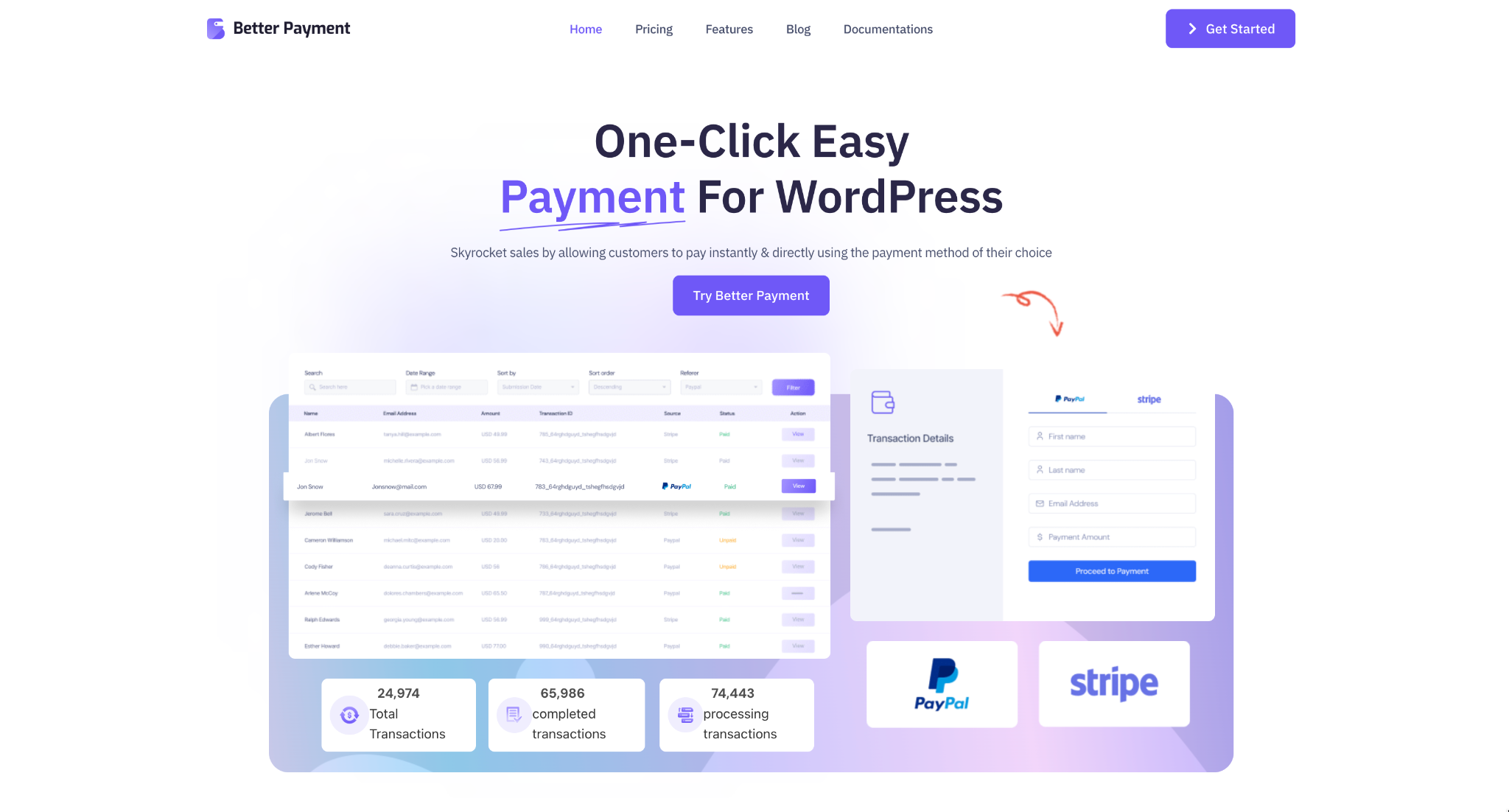
Better Payment gives you clean donation forms with only the fields you need, optimized for the phones where much of your AI-referred traffic will come from. Fewer steps and faster loads mean more completed gifts and fewer abandoned ones. You can manage every payment from your WordPress dashboard in one place.
2. Built-In Recurring and Subscription Billing
With recurring donations built in, donors can choose monthly, quarterly, or annual giving in one click, and the billing runs automatically. Making monthly the default is where the biggest revenue lift lies and it is one of the strongest ways to increase recurring donations over time.
3. Multiple Payment Methods And Secure Processing
Support for cards, PayPal, Stripe and popular gateways lets donors give the way they prefer, so it pays to choose the right payment system for your site. Secure processing protects both your supporters and your reputation, which keeps conversion high right at the point of giving.
4. Campaign Tools That Match Your Content
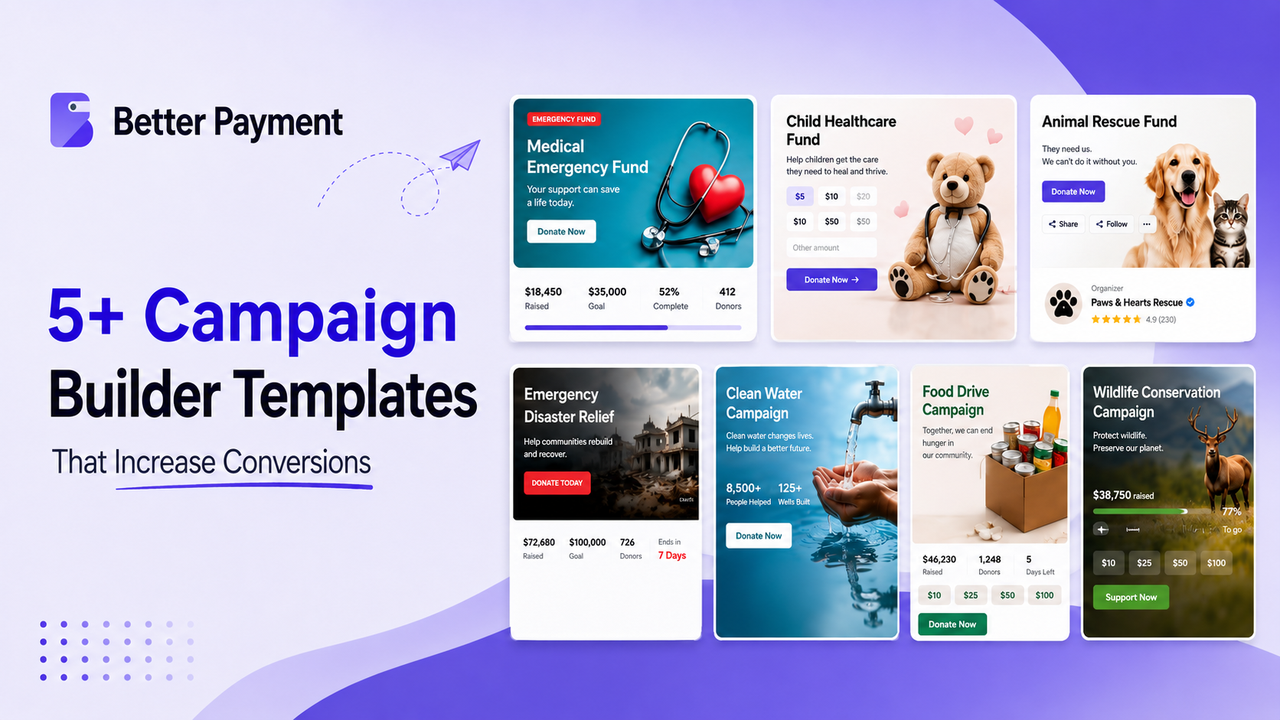
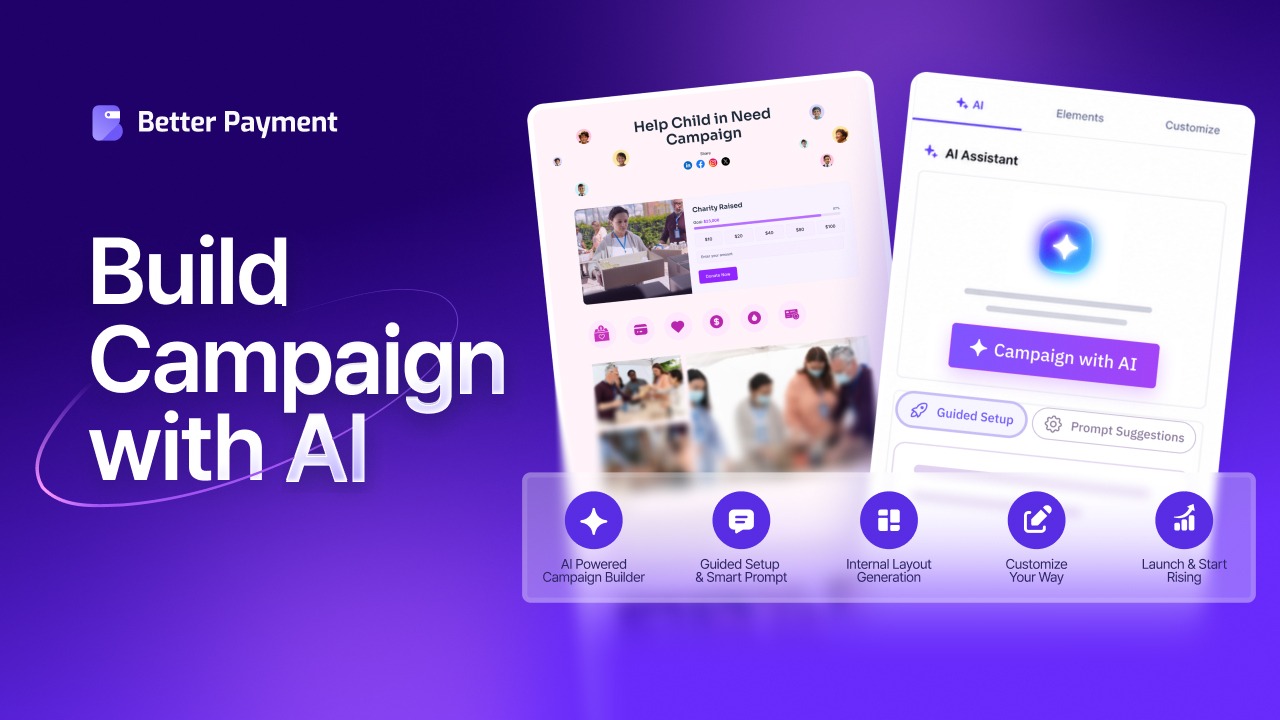
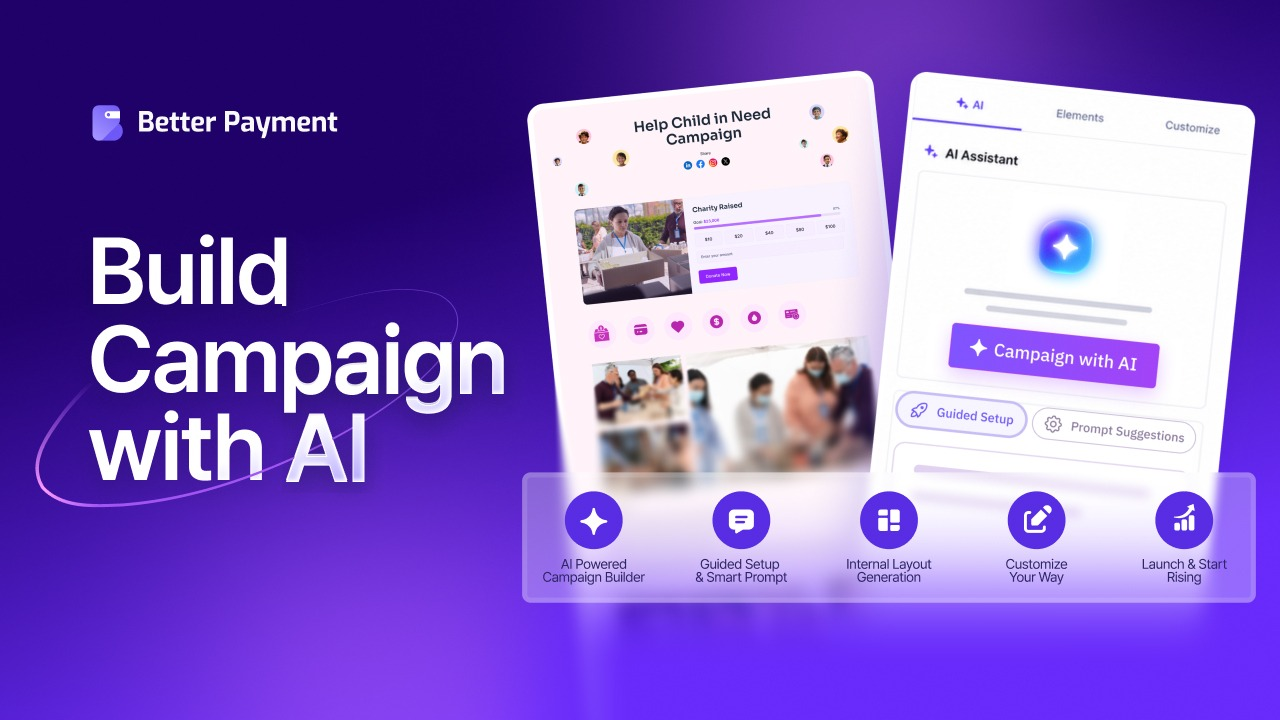
The visibility you earn through SEO works best when it points to a compelling campaign page. With the AI Campaign Builder in Better Payment, you can launch a focused donation campaign quickly and give AI-referred donors a clear place to act.
Pair it with peer-to-peer fundraising to turn each supporter into an advocate who widens your reach even further.
Start Getting Found And Growing Donations Today
The rise of AI search is not a threat to nonprofits. It is an opening. The very traits that make your content AI-friendly, which are clarity, honesty, real experience, and helpfulness, are the same traits that build trust with donors.
Hold on to three ideas.
- First, SEO is not dead; it has grown into generative engine optimization and the winners are the sources AI chooses to cite.
- Second, you already have the raw material AI values most, because you do real work and can tell real stories.
- Third, none of it pays off without a giving experience that is fast, secure, and built for donations.
That final piece is what Better Payment is built to give you. Start with one or two strategies from this guide, measure what changes, and build from there. Get found by the answer engines, welcome the warmer visitors they send, and give them an easy way to say yes.
Subscribe to our blog for more donation and growth strategies, and join our Facebook community to connect with other nonprofit professionals and share what is working for you.
Frequently Asked Questions (FAQs)
What is SEO for nonprofits in the age of AI?
It is the practice of making your nonprofit findable across both traditional search and AI tools. In 2026, that means optimizing for search engines and for AI answers from ChatGPT, Perplexity, and Google AI Overviews. The aim is not only to rank, but to be understood, trusted, and cited inside the answer a donor reads.
What is the difference between SEO, GEO and AEO?
SEO makes your content findable through technical health, quality, and authority. GEO, or generative engine optimization, shapes content so AI tools summarize or cite it. AEO, or answer engine optimization, focuses on directly answering questions. They overlap heavily and share the same foundation of clear, trustworthy, well-structured content.
Is SEO still worth it for nonprofits if clicks are falling?
Yes, and arguably more than before. Search is one of the few channels where a small nonprofit can compete with a large one without an ad budget. Fewer visitors may click, but AI-referred visitors tend to arrive pre-informed and convert at a higher rate, so the traffic you do earn is warmer and closer to giving.
How do I get my nonprofit cited by AI tools like ChatGPT?
Make your content easy to extract and trust. Answer questions directly at the top of each page, state your name, location, and mission clearly and consistently, add schema markup, and publish real stories under real author names. These signals help AI systems recognize your organization and choose it as a source.
How does Better Payment help nonprofits drive more donations?
Better Payment turns the traffic your SEO earns into gifts. It offers fast, mobile-ready donation forms, built-in recurring and subscription billing, multiple secure payment methods, and campaign tools. That means warmer visitors from AI search meet a smooth, secure giving experience that is designed to convert.